
by Laura Lengnick | Aug 6, 2019 | Resilient Agriculture
I am looking forward to catching up with Resilient Agriculture farmers Ron and Maria Rosmann in just a few weeks. Ron and Maria have invited me to open the field day by sharing some of the lessons I’ve learned from sustainable farmers and ranchers about how to cultivate climate resilience with sustainable and organic agriculture.
I will share three simple lessons to help frame the field day events:
- Resilience is about more than bouncing back! It is about design and management of systems to cultivate the capacity to avoid or reduce damage from disturbance.
- Resilience has regional roots! What I mean by this is that “it takes a region to raise a resilient farm.” We need each other – the producers and the eaters – to cultivate resilience. No one farm can do it alone!
We already know enough to put us on the path to a resilient food future! The Rosmann family, and many others like them all across the country, have been busy for the last 30 years bringing the future into being. This farm, and many others like it all across our country ARE THE FUTURE of food. We don’t need any more research, any more studies, any new technologies – the future is already right here – you are standing in it.
by Laura Lengnick | Apr 22, 2019 | Resilient Agriculture
Looking forward to spending time with Michelle Miller and company at the Center for Integrated Agricultural Systems next week to discuss how resilience thinking might help us envision bouncing forward from the Midwest flooding rather than simply bouncing back!
Find out more information about the event here!
by Laura Lengnick | Apr 20, 2019 | Resilient Agriculture
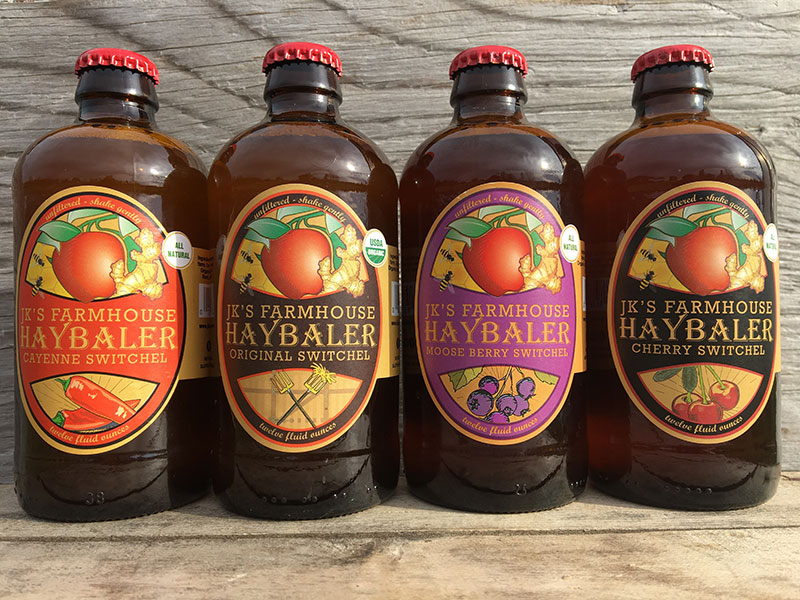
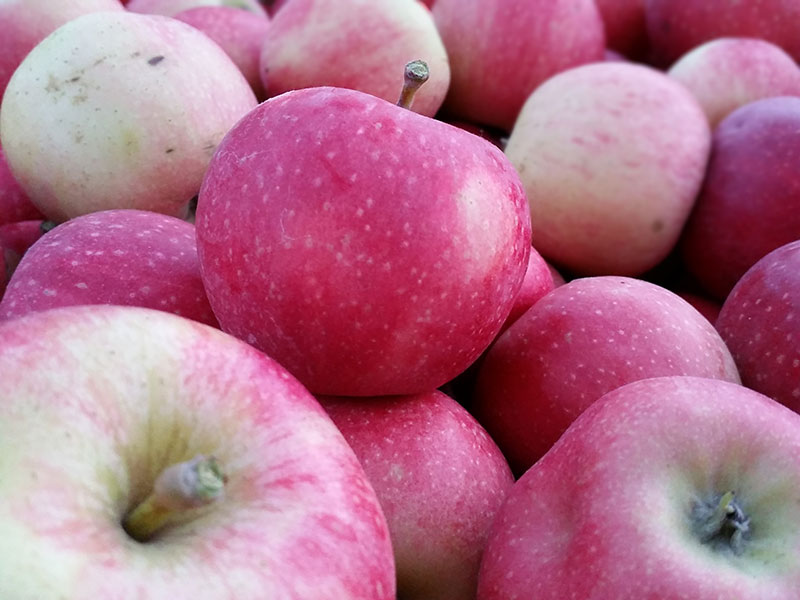
Had a great visit with Resilient Agriculture grower Jim Koan of Almar Farm and Orchards in Flushing MI this past weekend. Jim says that weather challenges have grown more frequent and more extreme since 2013. His decision to move to producing cider and other processed apple products continues to serve him well. Jim has expanded his line of JK Scrumpy’s organic ciders and offers many other apple-based products, including a drinking vinegar (made with Jim’s apple cider vinegar) called switchel. Switchel is an old-fashioned “energy drink”, which has been served to generations of hard-working field hands to give them a boost of energy and to help them rehydrate in the hot summer sun. Yum! Thanks for a great visit Jim!
Check out their farm and some amazing products here.
by Laura Lengnick | Apr 4, 2019 | Resilient Agriculture
The latest episode of SARE’s Our Farms, Our Future podcast series features Laura Lengnick, a soil scientist and founder of Cultivating Resilience, LLC, a consulting firm that offers ecosystem-based climate risk management and planning services. Lengnick speaks with Don Teske, a fifth-generation farmer in northeastern Kansas who is currently transitioning from cropping to cattle grazing on his farm. They discuss the valuable role of the family farmer in a sustainable food system.
Check out the podcast here!
SARE is supported by the USDA National Institute of Food and Agriculture. Their grant programs are administered regionally, with involvement from producers and others in the agricultural community. Their grassroots structure allows SARE to better identify and support local solutions to local problems.
The Our Farms, Our Future podcast series brings together the sustainable agriculture community for thought-provoking conversations about the state of agriculture, how we got here, and where we’re headed.
by Laura Lengnick | Mar 14, 2019 | Resilient Agriculture
Enjoyed spending a day earlier this week at the Angelic Organics Learning Center sharing some Resilient Agriculture teaching tips with educators in the Farm Beginnings Collaborative and getting a tour of Angelic Organics led by Farmer John, followed by conversation over wonderful dinner featuring local food at Bushel & Peck’s Local Market in South Beloit IL. The collaborative works together to offer a unique farmer-training program in 14 states that is farmer-led, community-based, and focused on sustainable agriculture.
The tour of Angelic Organics checked off an item on my aggie bucket list! John Peterson AKA Farmer John led and tour of his greenhouse and field operations, as well as, several beautiful buildings illustrating biodynamic design and construction.
John Peterson is the subject of the beautiful 2005 documentary “The Real Dirt on Farmer John,” an epic tale of a maverick Midwestern farmer. John made history through melding his family tradition of farming with the power of art and free expression to become a national model the resurrection of small-scale farming in America. Through highly personal interviews and 50 years of remarkably textured footage, filmmaker Taggart Siegel shares Farmer John’s haunting and humorous odyssey, capturing what it means to be wildly different in a rural community.
If you have not seen this film, get thee to a streaming service, invite some ag/foodie friends over, and watch as soon as you can!
Thanks for a great tour, John!
by Laura Lengnick | Jul 13, 2017 | Resilient Agriculture
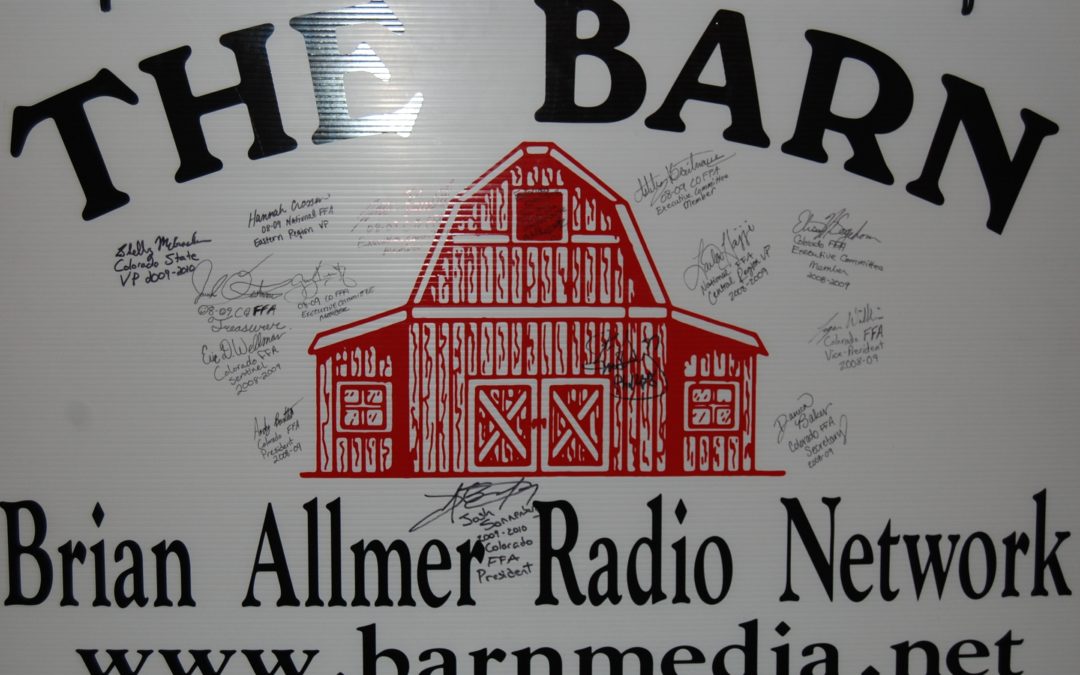
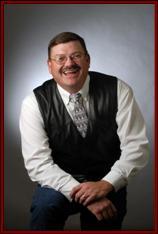
I had the great pleasure earlier today of visiting with Brian Allmer at the Barn. We got together to talk about my visit to Colorado at the end of this month. Brian and his wife Connie live on his family farm & ranch in Northeastern Colorado. Brian’s farm was named a Colorado Centennial Farm in 2016.
Brian Allmer
Brian is “the principle bottle washer,” as he puts it, and founder of Barn Media and the Colorado Agriculture News Network. Brian runs an awesome operation dedicated to covering the issues that matter to Colorado agriculture. “Barn Media & the Colorado Ag News Network’s mission,” says Brian, “is to provide accurate and factual information pertaining to any ag issue facing producers & agriculture entrepreneurs and then let the listener or webpage visitor make up their own minds based on the facts on the discussions presented to them.”
During our visit before the interview, Brian’s deep knowledge, abiding respect and genuine love for agriculture and the people in agriculture, especially young people, really shone through. I learned that he is the “Official Livestock Announcer” at both the Colorado State Fair and the National Western Stock Show. Brian has also served as a board member of the Colorado Future Farmers of America and 4-H Foundations. And he is co-founder and coordinator of the Briggsdale Classic Open, an annual stock show that has rapidly become a “must” for 4H and FFA youth involved in exhibiting market beef, lambs and goats.
We had a great conversation today about the new risks and opportunities created by climate change. “Climate risk” is increasing agricultural risks across the board – production, marketing, legal/regulatory, financial and human.
Although Colorado producers are masters at managing the risks associated with changing weather cycles and extremes of weather, these kinds of weather challenges are likely going to come faster and be more intense in coming years. Climate risk is something new. Practices that have worked in the past to manage weather-related risks will become less successful over time.
City region food systems bring urban and rural people together for mutual benefit. Credit FAO
We also discussed a new idea that holds a lot of opportunity for agriculture. The “City Region Food System” is a sustainable development idea that is rapidly gaining traction around the world. Simply put, this solution changes the nature of the relationship between urban and rural areas from one that is exploitive to one that is mutually beneficial. Rural areas are recognized as providing services essential to the health and well-being of urban areas and are remunerated accordingly. Instead of being viewed as a source of additional raw materials, rural areas are viewed, for example, as a source of high quality food, clean water and air, open space, beautiful landscapes, and living expressions of place-based tradition. Rural areas can also contribute significantly to regional climate change solutions, by storing carbon in soils, reducing flooding, and providing many other mitigation and adaptation benefits to both rural and urban communities.
One of the real joys of my work these days is the opportunity to visit with all sorts of good people working in agriculture and food systems, all across the U.S. and beyond. We don’t always agree on the problems or the solutions, but we all share a deep love for the land and the people who care for the plants and animals that feed us. Thank you, Brian Allmer, for a great visit to the Barn. I look forward to catching up with you again real soon!
You can hear the full interview at BARN ONAIR & ONLINE 24/7/365.


Recent Comments